Is Your Teen Ready for the ACT Combo Course, Safer Driver and VRU Course?
If you are the parent of an ACT learner driver, at some point in the last few weeks or months someone has probably mentioned the Safer Driver Course or the Combo. Maybe another parent at school brought it up. Maybe your teenager came home having heard about it from a friend who just got their P plates. Maybe you searched online trying to work out what courses are actually required and stumbled across it.
And now you are sitting with a version of the same question most parents ask at this stage: is my teen actually ready for this, or is it too early?
It is a fair question and it is worth answering properly, because the timing of when your teenager completes the ACT Combo Safer Driver and VRU Program makes a real difference to how much they get out of it. Too early and the content does not land the way it should. At the right time, it genuinely changes how they drive.
This article walks through everything a parent needs to know: what the combo course involves, the eligibility rules, the signs that your teenager is ready, the signs they might need a bit more time behind the wheel first, and how to think about the timing strategically so you are not just ticking a box but actually giving your teen the best possible foundation for a lifetime of safe driving.
What the ACT Combo Safer Driver and VRU Program Actually Involves
Before thinking about readiness, it helps to understand what you are preparing your teenager for.
The ACT Combo Safer Driver and VRU Program combines two separate government-recognised programs into a single Sunday online workshop running from 10am to 2:30pm. The two programs brought together are the ACT Safer Driver Course and the ACT Vulnerable Road User Program.
The Safer Driver Course works through the psychological and behavioural side of driving. It covers how emotions affect decision-making behind the wheel, the outsized influence of peer passengers on young driver risk-taking, speed management, hazard recognition, fatigue, distraction, and the effects of alcohol and drugs on driving performance. The goal is not to teach road rules but to help young drivers understand why certain situations are dangerous and build the awareness to manage them.
The Vulnerable Road User Program covers safe road sharing with cyclists, pedestrians, motorcyclists, and electric scooter riders. It uses specific scenarios to build practical habits: how to overtake a cyclist safely, how to handle roundabouts when cyclists are present, the Dutch Reach technique for opening car doors, how to read pedestrian environments in school zones and shared areas, and how to anticipate the behaviour of vulnerable road users who may not be as predictable as other cars.
After the Sunday workshop, your teenager books in to complete the Part Two practical driving component, which is an on-road drive arranged with the Road Ready Centre in Mitchell on a day and at a time that works for everyone.
The total cost is $209. Completing the full combo credits your teenager with 30 hours toward the required 100-hour ACT driving logbook. That is a saving of $30 compared to doing each course separately, and a significant reduction in the number of supervised sessions you need to provide as a parent.
The Official Eligibility Rules
Before anything else, there are three eligibility requirements that must be met.
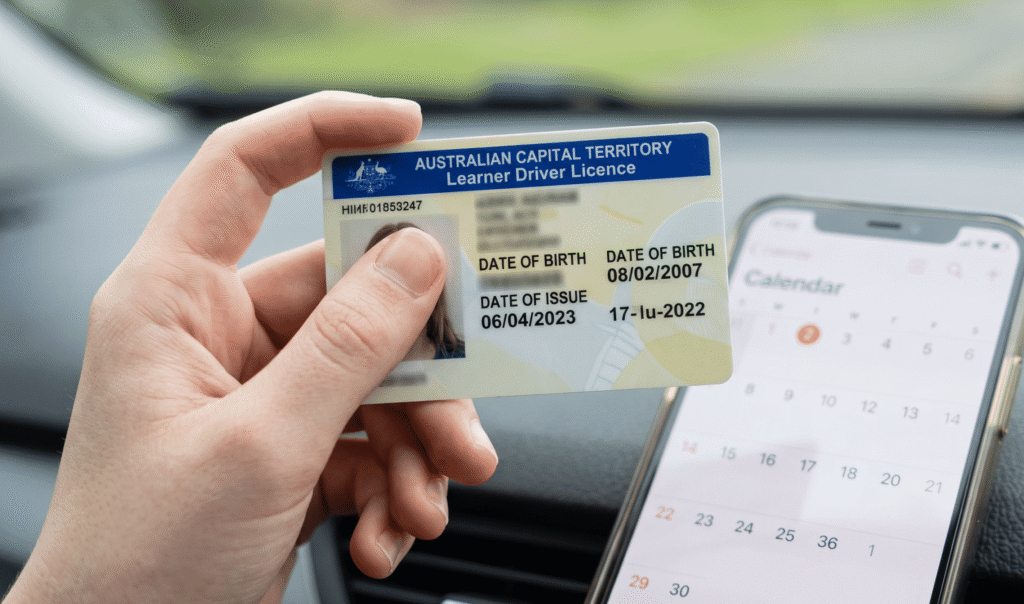
Three months on the licence. Your teenager must have held their ACT Learner Licence, or some other form of licence, for a minimum of three months before the course date. This is not negotiable and it is checked at the time of booking. A learner who got their L plates two months ago cannot book yet, even if they feel ready.
Under 25 at the time the licence was issued. The Learner Licence must show that your teenager was under 25 years of age when the licence was issued or last renewed. For most ACT learner drivers this is not an issue, but it is worth double-checking the date on the licence before booking.
Recommended experience level. The course recommends that participants have completed at least 30 hours of supervised driving with a qualified supervisor before attending, or a minimum of 10 hours with an Accredited Driving Instructor. This is a recommendation rather than a hard rule, but it exists for a good reason that is worth understanding.
Why the 30-Hour Recommendation Exists and Why It Matters
The 30-hour recommendation is the part most parents either skip past or take too literally. It is worth sitting with for a moment because it goes to the heart of the readiness question.
The Safer Driver Course and the VRU Program are both designed to work with existing driving experience, not to create it from scratch. The discussions about hazard recognition assume your teenager has actually encountered hazards on real roads. The scenarios about managing peer passenger pressure assume they have driven with friends in the car. The content about decision-making at speed assumes they have some experience of what speed actually feels like from the driver’s seat.
A teenager who comes to the course with very few hours behind them can still participate and will still learn things. But the content will be largely theoretical for them. They will be processing ideas without having the experience to anchor them to real situations they have already lived through.
A teenager who comes in with 25 to 40 hours already logged will have a completely different experience of the same content. When the instructor talks about how stress or distraction affects your ability to respond to a hazard, that teenager will be connecting it to specific moments from their own driving. When the VRU scenarios cover cyclist overtaking on a narrow road, they will already know what it feels like to make that judgement call in real time. The course does not just teach them something new. It reframes and deepens something they are already developing.
That difference in experience level is why the recommendation exists. It is not a gatekeeping rule. It is practical guidance about when your teenager will get the most from the investment.
Signs Your Teen Is Ready
Beyond the official requirements, there are a handful of practical signs that indicate your teenager is at the right stage for the combo course to land well.
They are making independent decisions behind the wheel. Early in the learner period, most teenagers need constant prompting: check your mirrors, signal earlier, slow down. A teenager who is ready for the combo has started anticipating those prompts before you give them. They are building their own habits rather than just responding to yours.
They have driven in a variety of environments. If all your teenager’s hours have been on quiet suburban streets or a single familiar route to school and back, they are probably not yet at the point where the course content will connect to lived experience. A teenager who has driven on arterial roads, in moderate traffic, in the rain, and at night in at least a couple of sessions is in a much better position to engage with the course material.
They have had at least one situation that made them think. This might sound odd but it is genuinely important. Almost every driver, during the learner period, has a moment that brings home how quickly things can change: a car pulling out unexpectedly, a pedestrian stepping off the kerb without looking, having to brake sharply because they misjudged a gap. A teenager who has had that moment and processed it is far more receptive to the course content than one who has had a smooth and uneventful 15 hours in quiet conditions.
They are somewhere between 30 and 60 hours in their logbook. Timing the combo course in this window gives your teenager the experience to engage with the material and still leaves enough logbook hours ahead for the 30-hour credit to make a meaningful difference to the timeline. Doing it at 80 hours means you get the credit but it has less practical impact on how long the learner period takes. Doing it at 30 hours means your teenager has the experience foundation the course is designed to build on.
Signs They Might Benefit From a Few More Weeks First
There is no shame in recognising that your teenager might get more from the course with a bit more experience under their belt. Here is what to look for.
They are still primarily reactive rather than anticipatory. If you are still the one noticing hazards before they do consistently, a few more dedicated hazard recognition sessions behind the wheel first will mean the course content resonates rather than just washes over them.
They have not yet driven with any passengers other than you. The Safer Driver Course puts significant emphasis on the peer passenger effect, the well-documented tendency for young drivers to take more risks when their friends are in the car. If your teenager has not yet experienced that social dynamic in a driving context, the course content about it will be harder to connect to anything real.
They are not yet confident in basic car control. The combo course is not a driving lesson. It is an educational program that assumes basic vehicle control is already in place. If your teenager is still concentrating hard on gear changes, smooth braking, or parking, they are not yet at the stage where the higher-level content about risk and decision-making will make sense to them.
None of this means wait indefinitely. It means use the next few weeks of supervised sessions to target those specific gaps, and then book.
How the 30-Hour Credit Changes the Parenting Equation
Let us be honest about something. A significant part of why parents care about the timing of this course is the 30-hour logbook credit. Getting 30 hours credited from a Sunday course and a practical drive is a genuine and significant reduction in the number of supervised sessions you as a parent need to provide.
At one hour per session, 30 hours is 30 separate outings. At two sessions per week, that is 15 weeks of your evenings and weekends. The combo course compresses that into one Sunday and one practical drive.
For families with busy schedules, for parents who work shifts or travel for work, for households where the supervising driver responsibilities fall mainly on one person, this matters enormously. The 30-hour credit is not just a number on a form. It is a real reduction in the logistical load of the learner period.
And critically, the credit does not come at the cost of safety education. The whole point of the course is that your teenager comes out of it a genuinely better driver, not just a driver with a bigger number in their logbook. The 30 hours are credited because the program delivers an equivalent educational and practical benefit to 30 hours of standard supervised practice. That is the ACT government’s assessment, and it is reflected in how the course has been designed.
Booking the Combo at the Right Time
The practical recommendation for most families is to aim for a booking once your teenager hits around 25 to 30 hours in their logbook and has been on their licence for at least three months.
That timing means they have enough real driving experience to engage fully with the course content. It means the 30-hour credit will make a meaningful difference to the remaining timeline. And it means you still have 40 or so hours ahead of you with your teenager in which to observe and reinforce what they learned in the course.
One important practical note: the ACT Combo Safer Driver and VRU Program runs on Sundays and spaces fill quickly. This is consistently described as the most popular course offering for ACT learner drivers. If you wait until your teenager is at 60 or 70 hours and then try to book, you may find the next available Sunday is three or four weeks away, and you end up delaying the final push toward 100 hours unnecessarily.
The right approach is to identify your target booking window early, check available dates, and book ahead rather than waiting until the timing feels urgent.
What to Tell Your Teen Before the Course
A little preparation before the Sunday session makes a real difference to how much your teenager gets from it.
Ask them to think about two or three specific driving situations they have found difficult or uncertain during their learner period. They do not need to have resolved those situations perfectly. In fact, moments where they made a mistake or felt unsure are more useful than moments where everything went smoothly. The course discussions give them a framework for understanding what happened and why, and having a real example to bring to that discussion makes it personal and memorable rather than abstract.
Remind them that the course is not a test. There is no pass or fail judgment on how they have been driving. It is an educational environment where being honest about uncertainty and mistakes is the point, not something to hide.
And let them know about the practical drive component ahead of time so they are not surprised. The Part Two on-road drive with an accredited instructor from the Road Ready Centre in Mitchell is a positive experience, not an assessment designed to catch them out. The instructor’s role is to provide constructive feedback, not to grade them on a pass/fail basis in the way a licence test would.
Frequently Asked Questions
At what point in the learner period should my teen do the combo course? The practical sweet spot for most learners is somewhere between 30 and 45 hours in the logbook. This gives enough real experience to engage fully with the course content while leaving enough hours ahead for the 30-hour credit to meaningfully shorten the remaining supervised driving period.
What if my teen has only just got their licence? They need to wait at least three months from the date their licence was issued or renewed before they can participate. Use that time to build up supervised hours and focus on the experience areas that the course will build on.
Can my teen book the combo if they have not yet done 30 hours of supervised driving? The 30 hours is a recommendation rather than a hard requirement. However, it exists because the course content is designed to build on real driving experience. Learners who come in with fewer hours tend to find the content less personally relevant.
Is the combo course the same as doing the Safer Driver Course and VRU Program separately? Yes, in terms of content coverage. Both programs are delivered in full as part of the integrated Sunday workshop. The combo also costs $30 less and credits 30 hours to the logbook compared to doing them separately.
What is the total logbook hours credit for completing the combo? 30 hours are credited toward the required 100-hour ACT driving logbook upon completing both the Sunday online workshop and the Part Two practical drive.
Does the 30-hour credit reduce the night driving requirement? No. The 10 hours of night driving must still be completed in actual night conditions with a supervising driver. Logbook credits from the course do not substitute for this requirement.
What if my teen is nervous about the online workshop format? The Sunday session is structured and interactive, delivered by an experienced Accredited Instructor (26 years of teaching in the ACT) in a group setting. Most participants find the discussion-based format engaging rather than intimidating. Knowing what to expect ahead of time, which this article covers, tends to reduce pre-course anxiety significantly.
Do I as a parent need to be involved in the Sunday session? No. The online workshop is attended by the learner only. However, it is worth having a conversation with your teenager about what they covered after the session, as some of the material around peer passenger dynamics and parental supervision styles can be useful for both of you to understand.
How do we arrange the Part Two practical drive after the Sunday session? After completing the online workshop, you are contacted by the Road Ready Centre in Mitchell directly to arrange the on-road drive at a time that suits both your teenager and the centre.
How quickly do Sunday sessions book out? Very quickly. The combo is described as the most popular course offering for ACT learners and available Sunday spots fill fast. Booking at least three to four weeks ahead of your target date is strongly recommended.
What does the course cost in total? The total cost of the ACT Combo Safer Driver and VRU Program is $209, paid securely online at the time of booking by PayPal or by credit or debit card through Stripe.
Can my teen repeat any part of the course if they feel they need more from it? Contact the course provider to discuss options if you have specific concerns. Generally, participants who engage fully with the Sunday session and the practical drive component feel well-prepared for the remainder of their learner period.